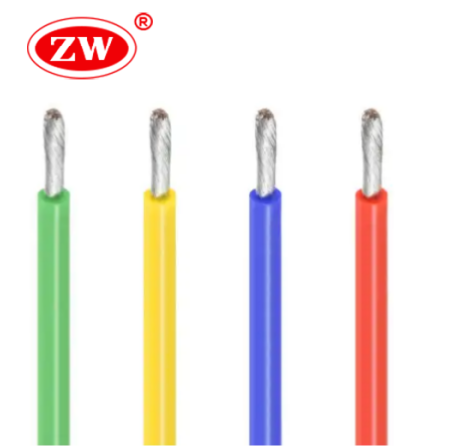
Inside the tightly integrated architecture of modern electronics, hook up wire executes the critical transfer of power and data. It is a component that demands absolute reliability, expected to maintain electrical integrity despite the thermal challenges and mechanical constraints of an enclosed chassis.
At ZW Cable, we deliver factory-direct wiring solutions engineered for efficiency. Strictly adhering to UL AWM standards and utilizing high-purity conductors, we ensure every connection meets the rigorous demands of safety and compliance.
Read More
What is Hook Up Wire?
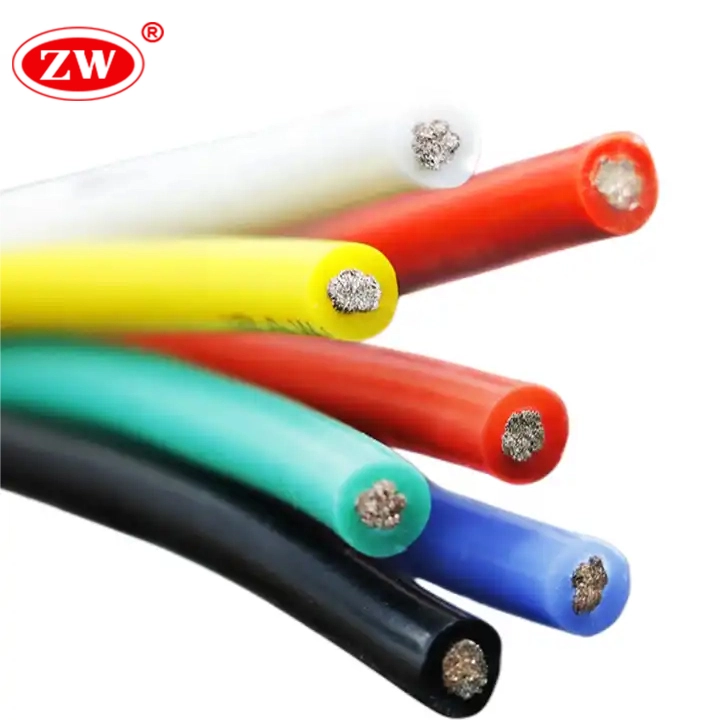
Hook up wire is a single-conductor insulated wire engineered for the internal connections of electronic equipment, appliances, and control panels. Its primary characteristics are defined by its specific UL Standard, which rigidly dictates the voltage rating (typically 300V or 600V), temperature resistance, and the polymer chemistry of the insulation (such as PVC, PTFE, or Silicone) to withstand specific environmental stressors like heat, abrasion, or chemical exposure.
Conductor: Bare vs Tinned Copper
- Bare copper is a strong baseline for many internal wiring builds.
- Tinned copper is frequently chosen where buyers prioritize more consistent solderability, improved behavior in humid storage environments, or cleaner processing in some harness operations.
Procurement tip: if your process involves soldering, flux residues, or long storage cycles, conductor finish can impact consistency. If your process is purely crimp-based with sealed terminals, bare copper may be perfectly appropriate.
Hook up wire stranded vs solid
Solid Core: Best for static wiring (breadboarding) where rigidity is required to hold a shape.
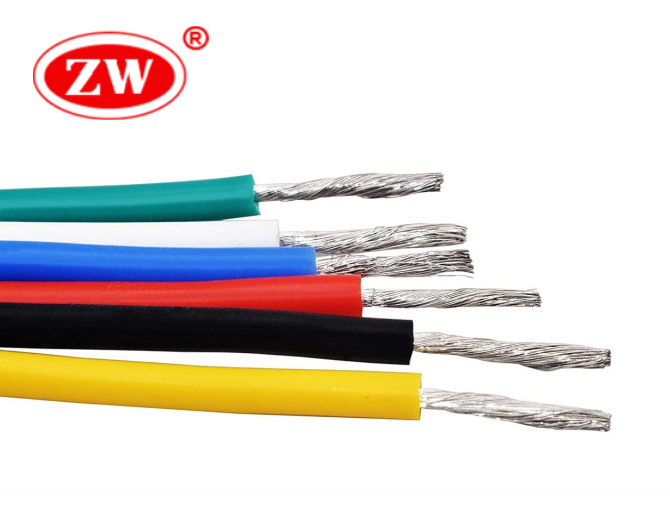
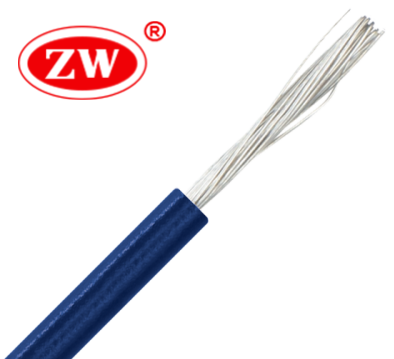
Stranded (7 to 65 strands): Designed to withstand vibration and repeated flexing without work-hardening or snapping. This is the standard for 95% of internal wiring.
The Insulation
Material selection defines the operational boundary of the wire. We process four distinct categories of insulation polymers, each engineered to address specific constraints regarding dielectric strength, thermal aging, and mechanical abrasion.
Types of Hook Up Wire
PVC Hook Up Wire (Thermoplastic)
Polyvinyl Chloride remains the standard for low-voltage applications due to its excellent flame retardation and processability.
- The Properties: We formulate our PVC compounds to meet VW-1 vertical flame tests. We offer both standard PVC (for general flexibility) and Semi-Rigid PVC (SR-PVC), which provides higher cut-through resistance and a thinner wall profile for high-density spacing.
- Best For: Consumer electronics, white goods, and static internal chassis wiring where temperatures do not exceed 105°C.
XLPE Hook Up Wire (Thermoset)
Cross-Linked Polyethylene is created by chemically bonding the polymer chains, converting the material from a thermoplastic to a thermoset.
Read our guide on The Difference Between Thermoplastics and Thermosets to understand why XLPE outperforms standard PVC in high-heat environments.
- The Properties: Unlike PVC, XLPE does not melt or flow at elevated temperatures. This makes it immune to “solder iron shrink-back,” a common defect where insulation retracts during manual soldering. It offers superior abrasion resistance and dielectric strength, allowing for thinner insulation walls without compromising safety.
- Best For: Automotive harnesses, motor lead wire, and high-density lighting fixtures where heat accumulation is a factor.
Silicone Rubber Wire (High-Flex)
Silicone is an inorganic polymer backbone that remains stable across the widest temperature delta in the industry (-60°C to +200°C).
- The Properties: This material exhibits high resistance to flex fatigue and compression set. It has zero “memory,” meaning it does not retain a coiled shape, facilitating easy routing in complex assemblies. However, it is soft; we recommend it for applications where the wire is protected from sharp mechanical edges.
- Best For: Robotics, battery interconnects (high current), and medical devices requiring sterilization.
Fluoropolymer Wire (PTFE / FEP / ETFE)
Often referred to by trade names like Teflon™, these fluorocarbons offer the lowest coefficient of friction and dielectric constant of any solid insulation.
- The Properties: These materials are chemically inert to nearly all industrial solvents, fuels, and acids. Their exceptional dielectric strength allows for miniaturization (ultra-thin walls) while maintaining high voltage ratings. FEP is extrudable for long lengths, while PTFE is typically tape-wrapped or ram-extruded for extreme heat (260°C+).
- Best For: Aerospace avionics, 3D printers, chemical processing equipment, and high-frequency data transmission.
Selecting the Right UL Style
In the US and global markets, UL (Underwriters Laboratories) AWM styles are the language of compliance. As a UL-certified facility, we produce the following core styles.
Pro Tip: Don’t over-spec. If you are running 24V DC signals inside a computer, UL 1007 is perfect. If you are wiring mains power (120V/240V) inside a washing machine, you need the thicker wall of UL 1015.
| UL Style | Insulation | Voltage | Temp Rating | The “Insider” Usage Note |
| UL 1007 | PVC | 300V | 80°C | The most common wire for low-voltage electronics. Thin wall, easy to fit in tight spaces. |
| UL 1015 | PVC | 600V | 105°C | Also known as MTW (Machine Tool Wire). The robust choice for AC power wiring. |
| UL 1061 | SR-PVC | 300V | 80°C | Semi-Rigid PVC. Tougher and thinner than 1007. Preferred for high-density connectors (IDC). |
| UL 1569 | PVC | 300V | 105°C | Upgraded version of 1007 with higher heat resistance. |
| UL 3321 | XLPE | 600V | 150°C | “Chemically Cross-linked.” Great for motors and transformers where heat is generated. |
| UL 3239 | Silicone | 3kV – 50kV | 150°C | High Voltage Lead Wire. Used in TV flybacks, neon signs, and microwave ovens. |
Common Hook Up Wire Sizes & Selection Notes
While we manufacture sizes from 10 AWG to 28 AWG, three distinct categories cover 90% of electronic applications.
24 AWG – 28 AWG (Signal & Data)
These fine gauges are standard for low-voltage sensor signals and PCB logic circuits. They are designed to fit high-density connectors (such as JST or Molex headers).
18 AWG – 22 AWG (General Control)
This is the most common range for internal chassis wiring and control panels. These sizes typically handle moderate currents (up to ~10 Amps) and provide enough mechanical stiffness to be easily routed and tied without breaking.
10 AWG – 16 AWG (Power Delivery)
Required for power supply leads, battery interconnects, and motor drives, these gauges handle higher current loads.
Technical Tip: Derating for Bundles Current ratings (Ampacity) are typically based on a single wire in free air. If you bundle multiple wires together in a harness or conduit, heat cannot dissipate effectively. You must derate (reduce) the allowable current capacity—often by 50% or more—to prevent the insulation from overheating.
Customization Services at ZW Cable
- Precision Cut, Strip, and Tin: Instead of buying spools and processing them in-house, receive pre-cut leads ready for immediate assembly. We offer tin-dipping services to tin the conductor tips, preventing strand splaying and ensuring instant soldering quality.
- Twisted Pairs & Cabling: To mitigate Electromagnetic Interference (EMI) in sensitive circuits, we can manufacture Twisted Pairs (with specific lay lengths) from discrete hook up wires. We can also bond multiple wires into flat ribbon configurations for organized routing.
- Custom Color Matching & Striping: Beyond the standard 10 distinct colors, we offer Pantone/RAL color matching for strict brand identity. For complex harnesses, we provide spiral striping to create thousands of unique identification codes.
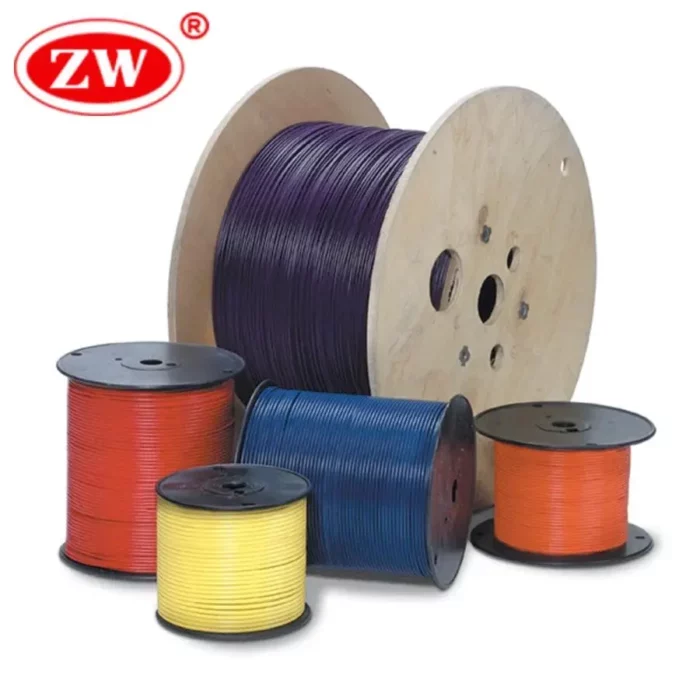
- Automation-Ready Packaging: Standard spools can create tension and “memory” (coiling) that jams high-speed automated feeders. We offer Barrel Packs (Drum Packaging) which allow the wire to dispense twist-free and tension-free.
Request a Quote today for custom specifications, bulk pricing, and 24-hour engineering support.