high voltage cable
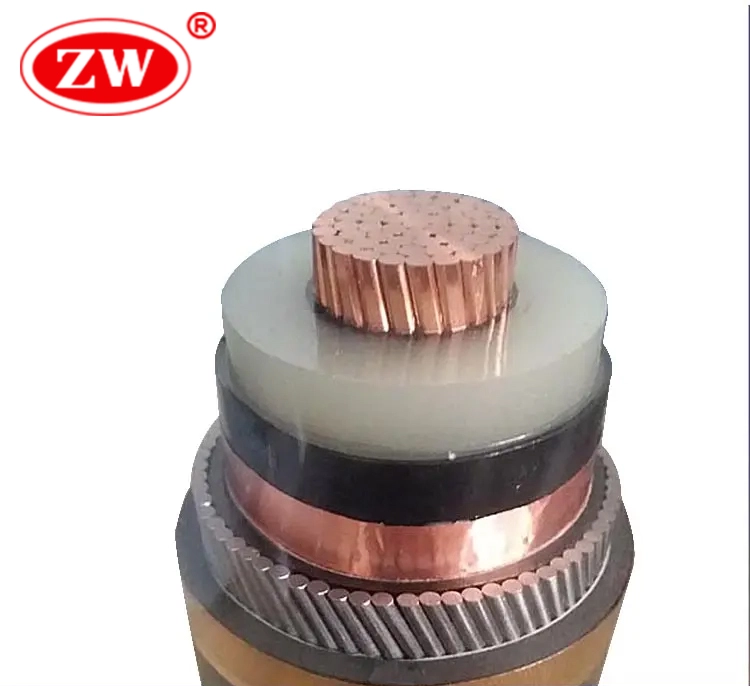
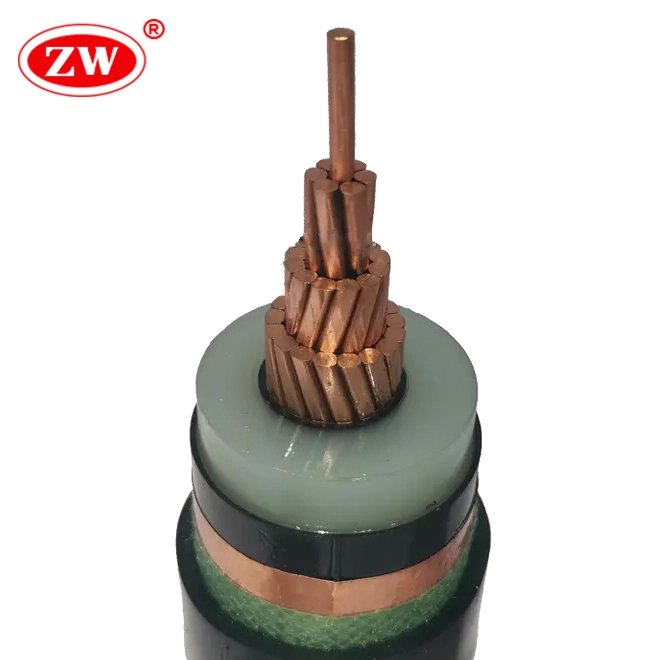
High voltage cable is an electrical cable designed for the transmission of high-voltage power, usually containing triple co-extruded insulation and shielding layers to safely and efficiently handle high-voltage electricity, and effectively reduce electric leakage hazards.

High-voltage transmission projects demand absolute grid stability. For networks rated at 66kV and above, insulation consistency and moisture resistance are critical to withstanding decades of electrical stress. In such rigorous environments, generic cable designs cannot guarantee the necessary operational lifespan.

ZW Cable addresses this by providing high-voltage solutions optimized for the specific installation environment. We supply cables with diverse structural configurations, including specialized moisture barriers and armor layers, ensuring the design aligns strictly with the physical demands of the project.

What is High Voltage Cable?

High Voltage (HV) cables operate within the 35kV to 220kV, primarily used for electric power transmission and distribution.

Unlike Medium Voltage (MV) cables, HV cables must manage significantly higher electric field gradients. This requires a sophisticated internal structure to control electrical stress and dissipate heat effectively. The industry standard has shifted almost exclusively to XLPE Insulation. Compared to traditional oil-filled cables, XLPE offers a higher operating temperature (90°C), lower dielectric loss, and simplified maintenance.

Typical XLPE High Voltage Cable Structure

Our cable construction is engineered to balance electrical performance with mechanical protection. A typical 110kV or 220kV single-core cable consists of the following concentric layers:

  • Conductor: We use Class 2 compacted Copper or Aluminum. For large cross-sections, we utilize segmental conductors to reduce the skin effect and lower AC resistance.
  • Inner Semi-Conductive Screen: A smooth layer extruded over the conductor to eliminate electric field concentrations at the conductor surface.
  • Insulation: Super-clean XLPE compound. We use a dry-curing process (nitrogen gas) to ensure the insulation is free from micro-voids and moisture.
  • Outer Semi-Conductive Screen: This layer ensures the electric field is contained within the insulation.
  • Semi-Conductive Water Blocking Tape: This provides longitudinal water tightness, preventing water migration along the cable in case of outer sheath damage.
  • Metallic Sheath: Functions as both a radial water barrier and a ground path for short-circuit currents. Options include:

    • Corrugated Aluminum: Lightweight and flexible.

    • Lead Alloy: Ideal for wet/corrosive environments (petrochemicals).

    • Copper Wire Screen: Used with composite sheaths for lighter weight.

  • Outer Sheath: Typically HDPE (High-Density Polyethylene) or PVC, providing protection against mechanical abrasion and environmental factors.

High Voltage Cable Types & Applications

We offer a diverse range of high voltage solutions tailored to specific environments:

XLPE Cable  

This is the standard solution for power transmission networks (66kV to 220kV). Featuring cross-linked polyethylene insulation, it offers low dielectric loss and high thermal resistance. It is the primary choice for overhead-to-underground transitions and substation connections due to its balance of performance and ease of installation.

Underground High Voltage Cable

These cables are engineered for direct burial or duct installation in urban environments. They feature robust outer sheaths, typically HDPE, to resist the friction and pulling tension during installation. They often include additional water-blocking features and can be supplied with termite protection or graphite coatings for sheath integrity testing.

Additionally, if the project is located in high-humidity zones where moisture ingress is a critical concern, specifying TR-XLPE cable becomes even more significant for preventing insulation breakdown caused by water treeing.

Submarine Cable 

Used for connecting offshore wind farms or inter-island power transmission. These cables require significant mechanical reinforcement. They are typically constructed with Lead Alloy sheaths for absolute water tightness and protected by single or double layers of Steel Wire Armor (SWA) to withstand seabed pressure, tidal movement, and anchor damage.

EV High Voltage Cable  

Designed specifically for the electric vehicle industry, these cables connect the charging port, battery pack, and motor. Unlike grid cables, EV HV cables (typically rated 600V to 1500V DC) prioritize flexibility and electromagnetic compatibility (EMC). They feature high-density braiding for shielding and silicone or XLPO insulation to withstand high temperatures and vibration within the vehicle chassis.

High Voltage Silicone Wire

This type is used primarily for internal wiring in high-voltage equipment, such as transformers, motors, and generators. Silicone rubber insulation provides exceptional flexibility and thermal stability (often up to 200°C), making it suitable for confined spaces where standard XLPE cables would be too rigid.

Further Reading: Type of High Voltage Cables:Features and Application

Technical Specifications (IEC Standard)

Parameter 66kV / 69kV 110kV / 115kV 132kV 220kV / 230kV
Standard IEC 60840 IEC 60840 IEC 60840 IEC 62067
Rated Voltage (U0/U) 38/66 kV 64/110 kV 76/132 kV 127/220 kV
Max System Voltage (Um) 72.5 kV 123 kV 145 kV 252 kV
Conductor Area 185 – 1600 mm² 240 – 2000 mm² 400 – 2500 mm² 630 – 2500 mm²
Conductor Material Cu / Al Cu / Al Cu / Al Cu / Al
Insulation XLPE XLPE XLPE XLPE
Metallic Screen Lead / Al / Cu Wire Lead / Al / Cu Wire Lead / Al / Cu Wire Lead / Al / Cu Wire
Operating Temp 90°C 90°C 90°C 90°C

Project Cases: ZW Cable in the Field

Over the past three decades, ZW Cable has delivered high voltage solutions to countless projects, addressing complex environmental challenges and strict budget constraints.

Case 1: ZW Cable 2XS(FL)2Y Solution

The Challenge: A European client needed to install a 110kV cable inside a damp utility tunnel. They required a cable that was completely waterproof (like a submarine cable) but light enough to hang on standard metal racks. Traditional lead-sheathed cables were too heavy for their tunnel structure.

The Solution: ZW Cable offered the 2XS(FL)2Y model to solve this weight issue. By replacing the lead sheath with a bonded Aluminum Polylam tape, we maintained a 100% moisture barrier while reducing the total cable weight by 30%. This allowed the client to install the cables quickly on the existing infrastructure without expensive structural reinforcements.

Case 2: ZW Cable 69kV Cable Solutions

The Challenge: A regional power expansion project required a 69kV underground transmission line running through rocky, uneven terrain where direct burial was the only option. The aggressive soil conditions created significant mechanical stress, posing a dual threat: physical crushing of the cable and subsequent deformation of the insulation, which would compromise electrical reliability.

The Solution: We supplied a ZW Cable solution utilizing Ultra-Clean XLPE insulation protected by a heavy-duty HDPE outer sheath. The premium dry-cured XLPE ensured superior dielectric strength and low transmission loss, while the robust mechanical structure successfully withstood high ground pressure and impact. This combination guaranteed that the cable maintained optimal electrical performance despite the harsh physical environment.

Case 3: ZW Cable Underground Solutions

The Challenge: An project required replacing overhead lines with underground cables in city center. The installation path ran through old, rough concrete ducts, creating a high risk that the cable jacket would be damaged during the pulling process.

The Solution:We supplied a ZW Cable 132kV solution featuring a flexible Corrugated Aluminum Sheath and a hard Graphite-Coated HDPE jacket. The robust HDPE resisted abrasion against the concrete, while the graphite coating allowed engineers to perform an immediate sheath voltage test after installation, confirming the cable remained undamaged and waterproof.

FAQ

Our cables are manufactured and tested according to IEC 60840 (for 30kV–150kV) and IEC 62067 (for 150kV–500kV).
Absolutely. We offer radial water barriers (Lead, Al-Poly Tape, or Corrugated Al) and longitudinal water-blocking tapes to ensure 100% moisture resistance.
Yes, for tunnel or indoor substation use, we can manufacture cables with Flame Retardant Low Smoke Zero Halogen (LSZH) sheathing to meet fire safety codes.
Scroll to Top
Get in touch with us today and see how we can help you reach your goals!