control cable
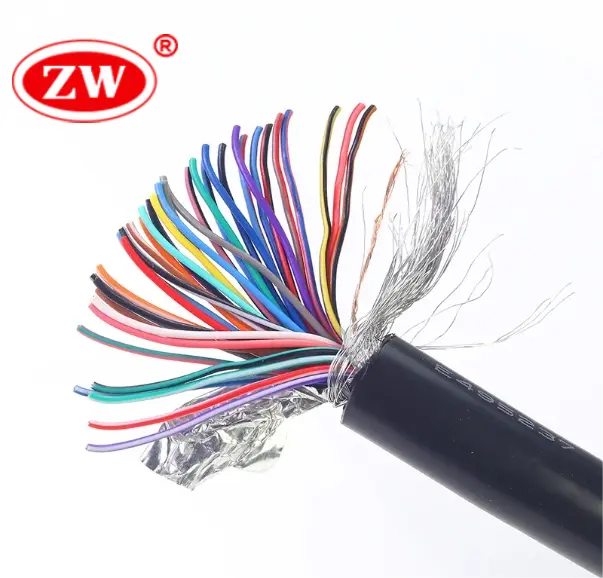
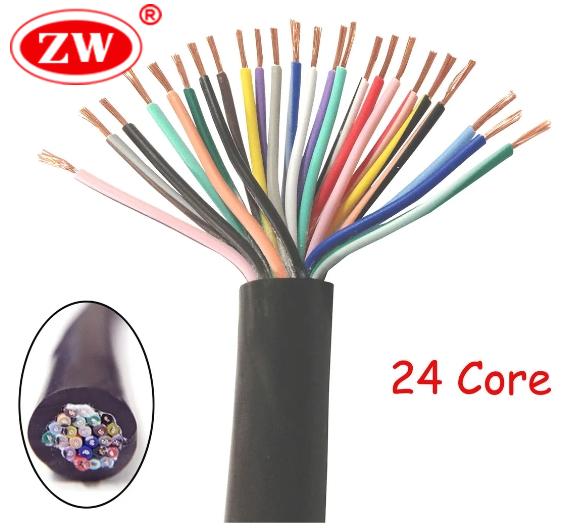
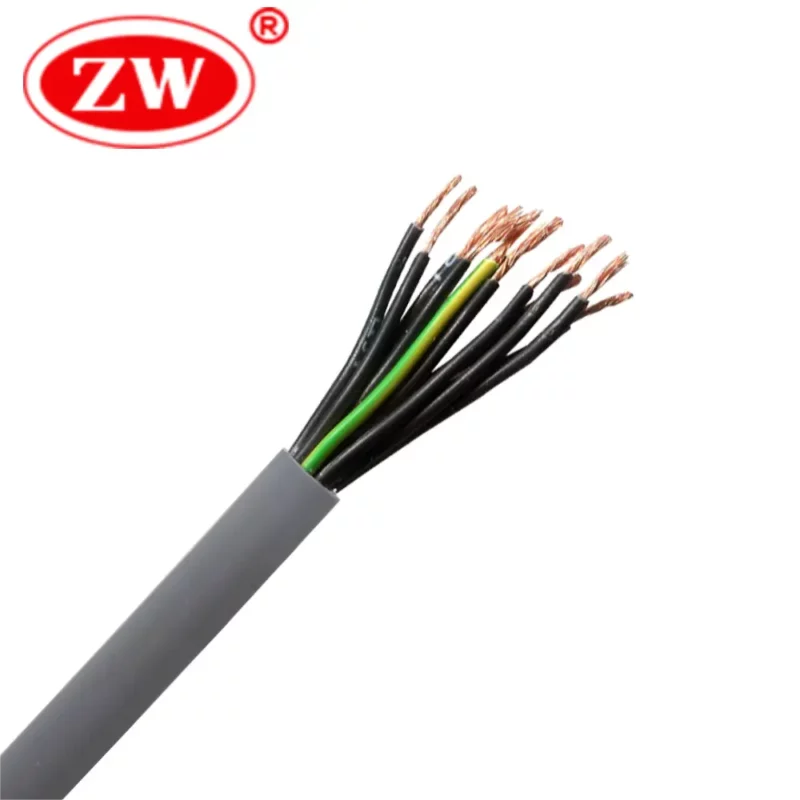
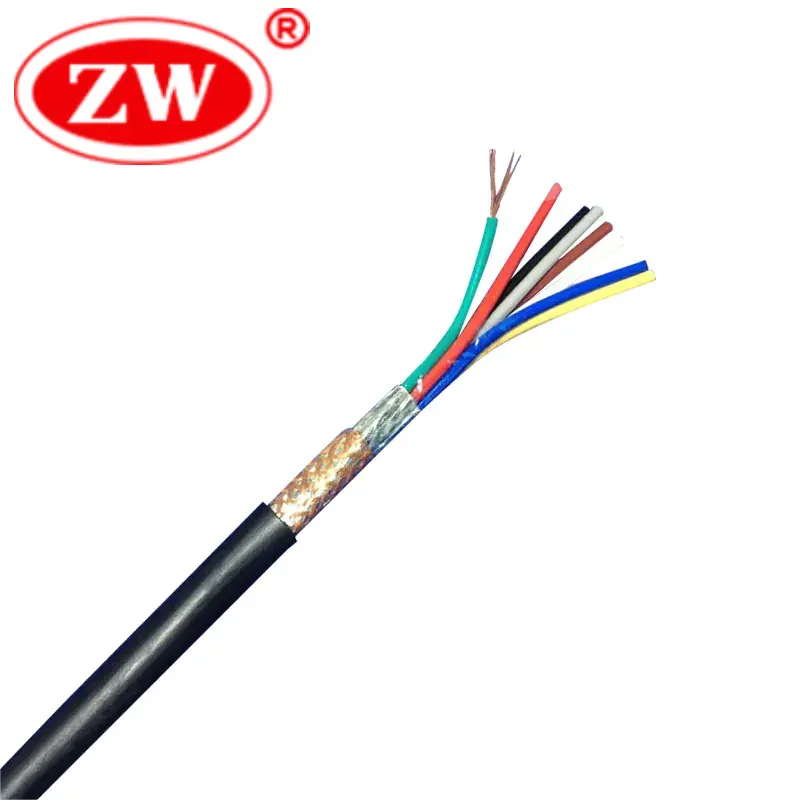
Control cables are dedicated cables for automation and instrumentation applications to regulate automated processes. As a multi-core cable, control cable is typically made of copper or aluminum with PVC insulation and sheath.

Effective industrial automation relies on the seamless transmission of logic signals between control panels and field devices. In environments defined by constant vibration, tight bending radii, and electrical noise, a standard wire is insufficient. Control Cables are specifically engineered with Class 5 flexible conductors and robust sheathing to maintain signal integrity where rigid cabling would fail due to mechanical fatigue or interference.

As one of the specialized global control cable manufacturers, ZW Cable supplies high-performance flexible control cables engineered for the rigorous demands of infrastructure projects. Our portfolio includes standard YY (Unscreened), CY (Shielded), and SY (Braided) series, all strictly manufactured to IEC and VDE standards.

What is a control cable?

Control Cable is a multi-conductor cable designed to transmit signals, data, and low-voltage electrical commands that regulate the operation of equipment. Unlike power cables that drive the machinery, control cables carry the logic—relays, start/stop commands, and status signals.

The Critical Distinction: Power vs. Control

A common pain point in procurement is confusing these two categories. While they may look similar externally, understanding Power Cable vs Control Cable is vital.

Conductor Class: Power cables (especially fixed installation) often use rigid Class 1 or 2 conductors. Our control cables exclusively use Class 5 Flexible Copper, allowing them to withstand tight bending radii in crowded control panels without metal fatigue.

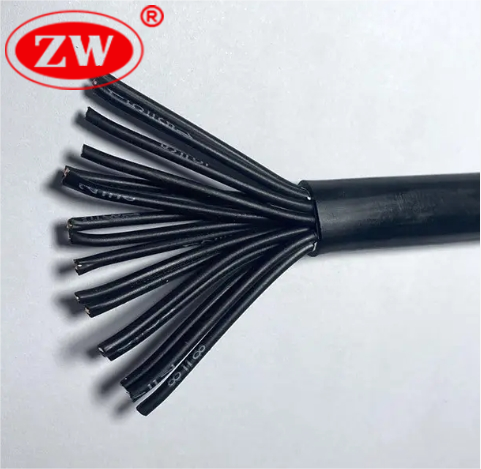
Insulation Color: Power cables use distinct phase colors (Brown/Black/Grey). Control cables typically use Black cores with White Numbers because color coding is impractical for cables with 7, 12, or even 61 cores.

What is Control Cable used for?

Control cables serve as the interconnecting link between the control center (PLC, DCS) and the field devices. However, depending on the signal type, the application boundaries must be clear.

Primary Applications:

  • Automated Assembly Lines: Connecting sensors, valves, and actuators to the main control panel.
  • Machine Tools: Wiring for CNC machines, lathes, and grinders where resistance to oil and vibration is required.
  • Robotics: Handling low-voltage commands for movement logic (Note: For continuous motion drag-chains, specialized Robot Cable is required).

Nuance: Control vs. Instrumentation

Engineers must also distinguish between Control Cable vs Instrument Cable.

  • Control Cables handle discrete logic signals (110V/230V) or relay controls.
  • Instrument Cables are optimized for very low-energy analog signals (4-20mA) and usually feature twisted pairs to cancel out crosstalk. Using a control cable for sensitive instrumentation can lead to signal degradation.

Our Control Cable Types

We categorize our inventory into three primary “Y-Series” (based on VDE standards) to address specific environmental challenges: YY, CY, and SY.

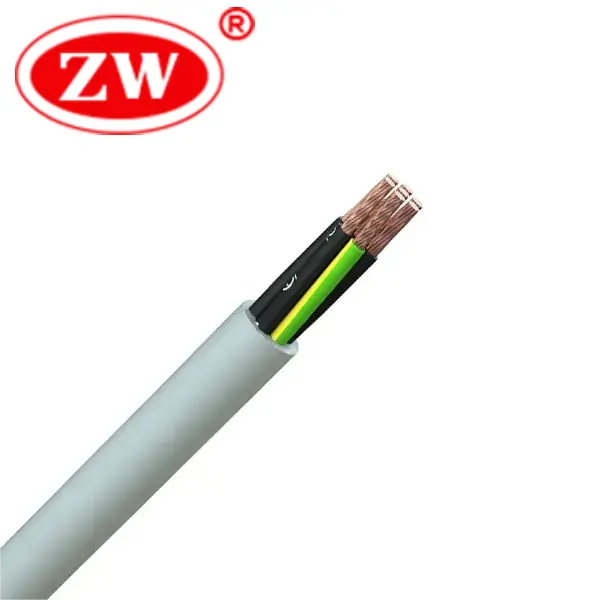
YY Control Cable (Unscreened)

  • Type: PVC Insulation / PVC Sheath.
  • Application: The most versatile and cost-effective solution for dry/damp indoor environments with low mechanical stress.

Constraint: Since it lacks shielding, it must not be run parallel to power cables to avoid interference.

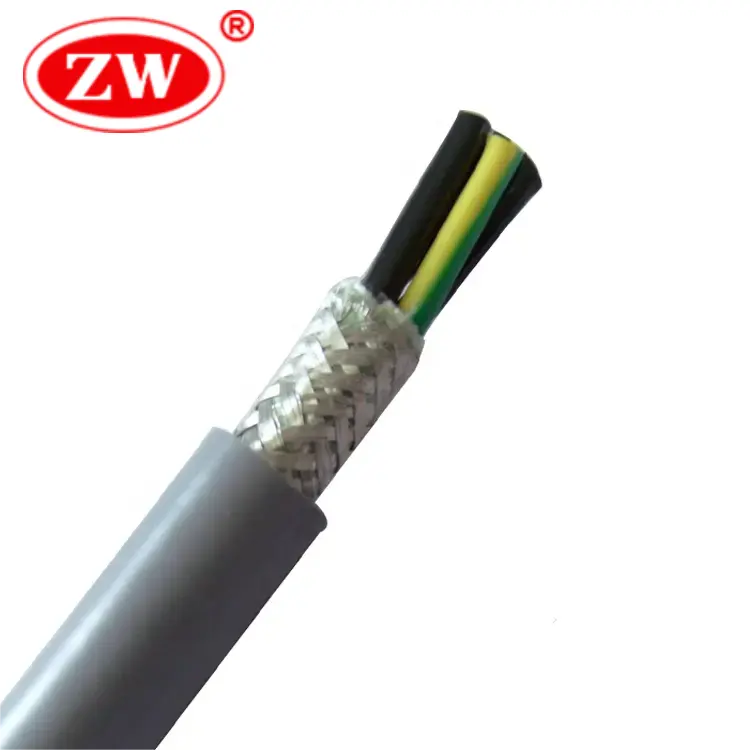
CY Control Cable (Shielded)

  • Type: Tinned Copper Wire Braid (TCWB) Screen.
  • Application: Noise-sensitive environments where Electromagnetic Interference (EMI) is a risk, such as near Variable Frequency Drives (VFDs) or servo motors.

Technical Insight: In modern automation, EMI is a silent killer of data integrity. Unlike budget cables with loose braiding, our CY cable utilizes a high-density screen (>85% optical coverage). This acts as a robust Faraday cage to block external noise—a critical factor when understanding signal cable requirements for PLCs to prevent “ghost signals” and system faults.

Further Reading: Understanding Shielded Cable And Difference

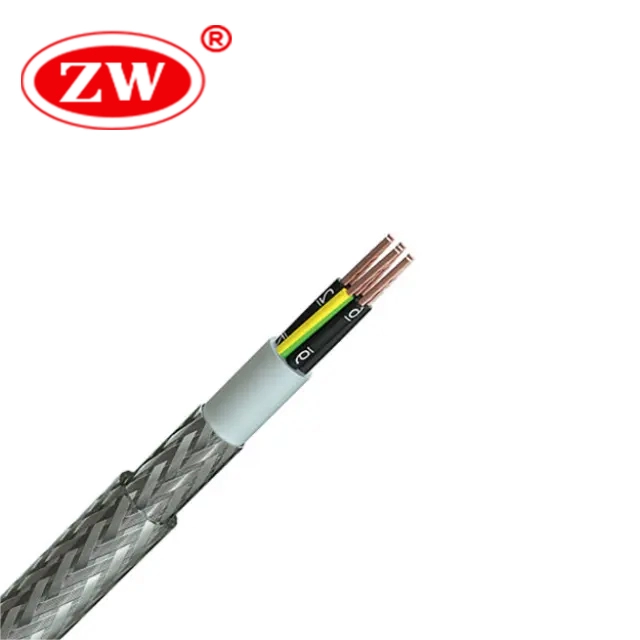
SY Control Cable (Armoured / Braided)

  • Type: Galvanized Steel Wire Braid (GSWB) with Transparent Sheath.
  • Application: Designed for tougher industrial environments where the cable might face abrasion or medium impact.

Expert Note: The steel braid provides mechanical protection, not electrical shielding. The transparent sheath allows maintenance teams to visually check for corrosion or damage without cutting the cable.

Technical Specifications

Feature ZW Cable Specification
Conductor Class 5 Flexible Copper (IEC 60228). We do not use CCA (Copper Clad Aluminum).
Insulation Premium PVC, XLPE, or LSZH (Low Smoke Zero Halogen) for public buildings.
Core Identification Black Cores with White Numbering (1, 2, 3…) + Green/Yellow Earth.
Voltage Rating 300/500V (Standard); 450/750V (Heavy Duty).
Test Voltage 4000V (Ensures dielectric strength).
Temperature Range Flexing: -5°C to +70°C; Static: -40°C to +80°C.
Bending Radius 10x Overall Diameter (Flexing); 4x (Static).
Sheath Properties Oil Resistant (IEC 60811-404) and Flame Retardant (IEC 60332-1).

Control Cable Size Selection

Don’t select based on current rating alone. In low-voltage control circuits, the physical tensile strength of the conductor and the availability of spare cores are often more critical than the electrical load.

  1. Choosing the Cross-Section (mm²) Unlike power cables, voltage drop is rarely the main concern for control cables. The concern is tensile strength.
  • 0.75mm² – 1.0mm²: Standard for most signal applications.
  • 1.5mm² – 2.5mm²: Recommended for longer runs (>50m) to ensure the cable has enough physical tensile strength to be pulled through trays without stretching the copper.
  1. Choosing the Core Count (Spare Capacity) A golden rule in control panel design is “Spare Capacity.”
  • If your system requires 10 active connections, do not buy a 10-core cable. Specify a 12-core or 14-core cable.

Reason: Cables often get damaged during termination, or systems get upgraded. Having 20% spare cores saves the massive cost of re-laying a new cable 2 years later.

  1. Choosing the Outer Diameter (Gland Sizing) Always check the datasheets for the OD (Overall Diameter) before ordering cable glands. SY (Steel Braided) cables have a significantly larger OD than YY cables of the same core count. Using the wrong gland will compromise the IP rating (waterproofing) of your control panel.

Common Control Cable Dimensions (Reference Table)

Note: Data below refers to YY (Unscreened) and SY (Armoured) models. CY (Shielded) diameters typically sit between YY and SY values.

No. of Cores x Size

(mm²)

Approx. OD

(YY Type)

Approx. OD

(SY Type)

Gland Size Rec.

(Indoor BW)

3 x 1.5mm² 6.8 mm 9.9 mm 20S
5 x 1.5mm² 8.3 mm 11.2 mm 20S / 20
7 x 1.5mm² 8.9 mm 12.1 mm 20
12 x 1.5mm² 11.8 mm 15.0 mm 20 / 25
18 x 1.5mm² 13.9 mm 17.0 mm 25
25 x 1.5mm² 16.5 mm 20.2 mm 25 / 32
4 x 2.5mm² 8.9 mm 12.1 mm 20
7 x 2.5mm² 10.9 mm 14.2 mm 20 / 25
12 x 2.5mm² 14.5 mm 17.8 mm 25

While the sizing guidelines above cover standard electrical requirements, we recognize that the physical environment dictates the true lifespan of a control cable. This is where our flexibility as a direct manufacturer adds tangible value to your project.

Instead of compromising with generic stock, ZW Cable can adapt the manufacturing specification to your site conditions. Whether you need to upgrade to Oil-Resistant Sheathing to prevent coolant damage in CNC machinery, or require Custom Sheath Colors—such as Red for fire-safety interlocks or Blue for 24V DC lines—to ensure instant visual identification in crowded cable trays, we are ready to configure a production run that matches your operational reality.

FAQ

YY is unscreened for general use. CY features a copper braid shield to block electromagnetic interference (EMI). SY features a steel braid for mechanical protection against abrasion and impact.
Standard PVC control cables are not UV resistant. For outdoor use, you must specify a Black UV-Resistant sheath to prevent cracking, or run the cable inside a protective conduit.
No. The steel braid on SY cable allows for flexibility but is not a water-tight armor like SWA.
Scroll to Top
Get in touch with us today and see how we can help you reach your goals!