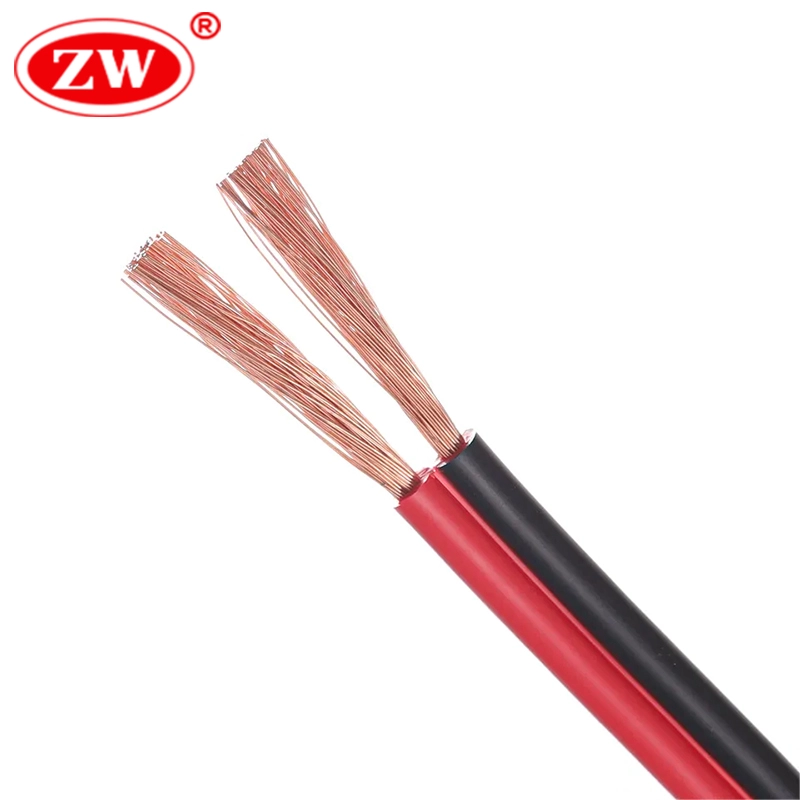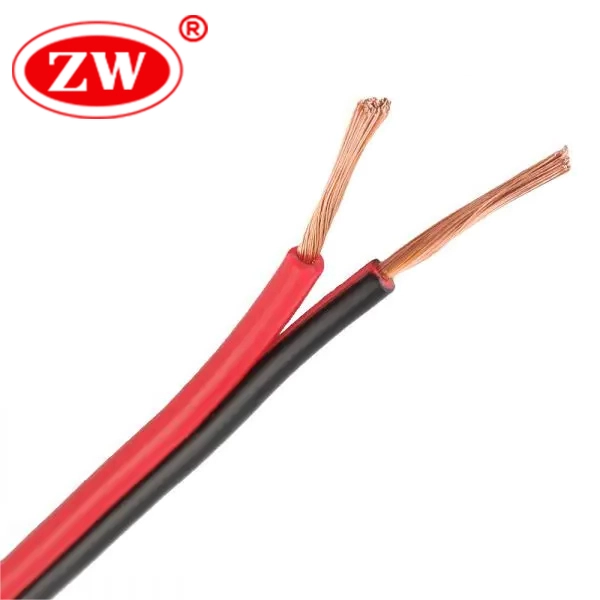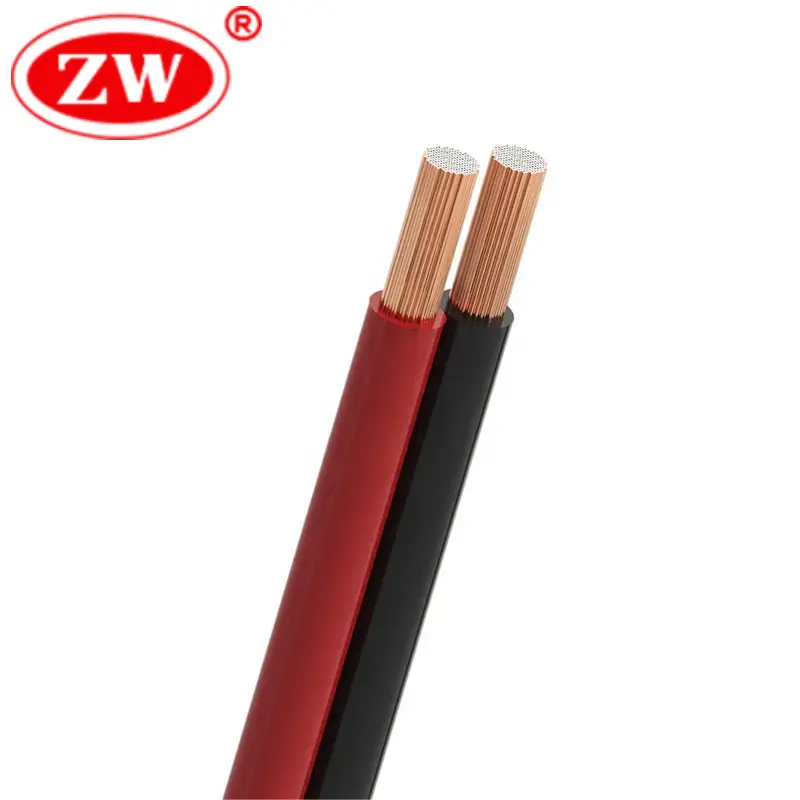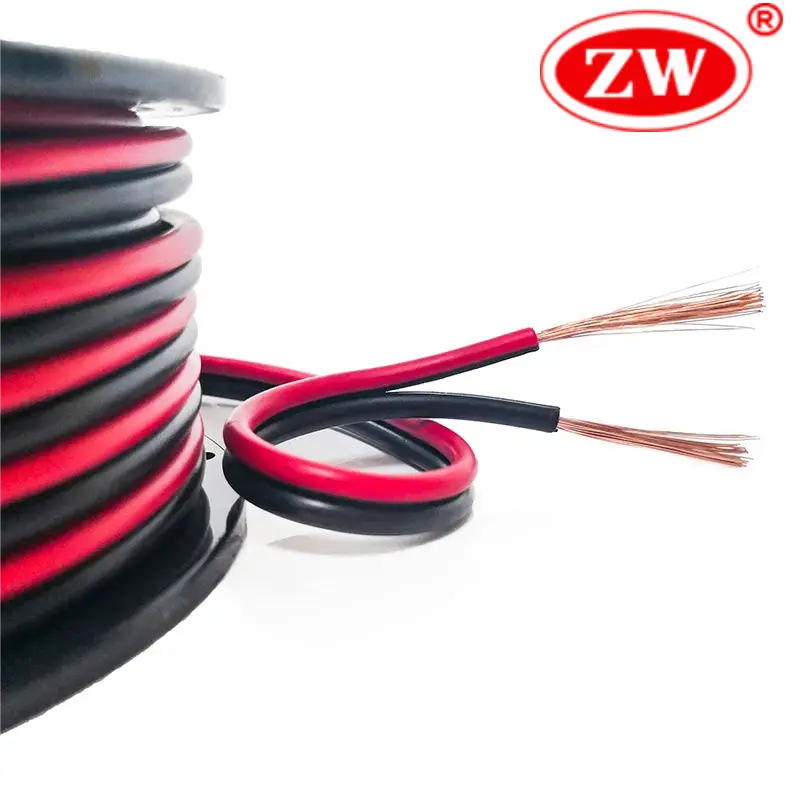
Speaker Wire serves as the electrical link connecting amplifiers to loudspeakers, acting as the passive lifeline for audio signal transmission. Widely utilized in high-fidelity home theaters, commercial architectural audio, and automotive systems, the integrity of this cable is the defining factor in the final sound performance of any installation.
With over 30 years of manufacturing experience, we produce premium bulk speaker wire strictly adhering to International Electrotechnical Commission (IEC) and American Wire Gauge (AWG) standards. From raw copper refining to final jacket extrusion, our factory controls every production variable to ensure low signal loss, consistent impedance, and maximum durability for global markets.
Read More
Speaker Wire Type & Material
- Conductor Material
The choice of conductor dictates the electrical characteristics (conductivity/resistance) and the price point of the final product. We offer three distinct conductor options:
OFC (Oxygen-Free Copper)
- Material Composition: We utilize high-grade copper refined to 99.99% purity in an oxygen-free environment.
- Performance: Achieves an electrical conductivity rating of approximately 101% IACS (International Annealed Copper Standard).
- Benefit: The removal of oxygen impurities prevents the formation of copper oxides within the crystal structure, which can act as semiconductors (diode effect) and distort the audio signal. OFC is the mandatory choice for high-fidelity home theaters, recording studios, and long-distance runs where resistance must be minimized.
CCA (Copper Clad Aluminum)
- Material Composition: An engineered composite featuring a lightweight aluminum core metallurgically bonded with a layer of pure copper.
- Performance: Leverages the Skin Effect, where high-frequency AC audio signals travel primarily along the outer copper surface.
- Benefit: Provides a cost reduction of 30-40% compared to solid copper and weighs roughly 60% less, significantly reducing logistics costs. It is the dominant standard for entry-level car audio and budget consumer electronics.
Not sure which one is right for you? Check out our dedicated guide: OFC VS CCA Wire: What Is The Real Difference
- Plating Process: Individual OFC strands are electroplated with tin before the stranding process.
- Benefit: The tin layer acts as a sacrificial anode, preventing the copper from oxidizing (turning green) when exposed to salt air, high humidity, or corrosive chemicals. This is essential for Marine Audio and outdoor landscape speaker systems.
- Structure Composition:
- Stranded: This is the industry standard for 99% of speaker cabling. It consists of multiple small-gauge wires bundled or twisted together to form a single conductor. This design significantly enhances flexibility, making it easy to route through conduits or automotive dashboards without kinking.
- Solid Core: Composed of a single, thick metal wire. While it offers a very stable electrical connection and is cost-effective to manufacture, it is rigid and prone to metal fatigue if bent repeatedly. Solid core speaker wire is rarely used in dynamic environments but can be found in specific permanent, in-wall installations.
- Braided: A configuration where individual conductors are interwoven in a complex geometric pattern (often Litz style). This structure is engineered to reject Radio Frequency Interference (RFI) and Electromagnetic Interference (EMI) without the need for heavy shielding. It also lowers the cable’s internal inductance.
- Jacket & Insulation
- Transparent (Clear) PVC: Showcases the copper quality; typically includes a polarity stripe (Red/Blue/White) for easy phasing.
- Red & Black (Zip Cord): The industry standard for automotive and low-voltage DC applications.
- Matte Finish: A non-glare, soft-touch jacket preferred by stage crews and AV integrators to avoid light reflection.
Safety Standards & Fire Ratings
- CL2 & CL3 (UL Standard – USA): Specifically formulated for in-wall installations. The jacket is designed to self-extinguish and prevents the spread of fire along the cable riser. This is essential for compliance with the NEC (National Electrical Code) for residential (CL2) and commercial (CL3) buildings.
- CPR (Construction Products Regulation – Europe): Mandatory for permanent cables in European buildings. We offer cables compliant with Euroclass Eca, Dca, and Cca standards, ensuring you meet the legal requirements for importing into the EU market.
- LSZH (Low Smoke Zero Halogen): Required for public infrastructure projects (airports, hospitals, subways). In the event of a fire, LSZH materials emit minimal smoke and no toxic halogen gases, facilitating safe evacuation and protecting sensitive electronic equipment from corrosion.
- CM / CMR (Riser Rated): Designed for vertical runs between floors in non-plenum areas. These cables prevent fire from traveling up the shaft from one floor to another.
Technical Specifications
In an industry rife with “undersized” wires, we guarantee True AWG manufacturing. We rigorously verify the Cross-Sectional Area (CSA) and DC Resistance (DCR).
| AWG
(Gauge) |
Conductor Area
(mm2) |
Max Recommended Run
(OFC) |
Primary Application |
| 10 AWG | ~5.26 | 30+ Meters | High-power subwoofers, outdoor landscape audio. |
| 12 AWG | ~3.31 | 15 – 30 Meters | Professional Home Theater, Whole-house Audio. |
| 14 AWG | ~2.08 | 10 – 15 Meters | Standard Hi-Fi, Rear Surround Speakers. |
| 16 AWG | ~1.31 | < 10 Meters | Bookshelf speakers, 70V Commercial Systems. |
| 18 AWG | ~0.82 | Short Internal | Internal cabinet wiring, entry-level systems. |
Engineer’s Note: Resistance data is based on 20°C ambient temperature. We can provide detailed test reports and resistance charts for each batch upon request.
How to choose the correct gauge?
Here are the three critical factors to consider when placing your order.
- The Installation Environment
Where will the wire be placed? If it is going inside a wall or ceiling, you must select a CL2/CL3 or CPR-rated jacket to meet building codes. If it is for a boat or outdoor patio, standard copper will rot; you need Tinned Copper. Matching the jacket compound to the environment is the first step in preventing system failure.
- Run Length & Impedance
Distance creates resistance. The longer the wire run, the more resistance the signal encounters, which can result in power loss and a “muddy” sound. For different cable lengths, please refer to the above specification table to determine whether to use 12 gauge, 14 gauge, or 16 gauge speaker wire.
- Equipment Load (Impedance & Power)
Beyond distance, the specific requirements of the connected equipment dictate the wire gauge. Low-impedance speakers (like 4-Ohm subwoofers) and high-wattage amplifiers draw significantly higher current than standard home audio setups. If the wire is too thin, it creates resistance that chokes power delivery and reduces dynamic range. For these high-load applications, upgrading to a thicker gauge is essential to maximize efficiency and prevent signal loss.
The ZW Manufacturing Standard
- By exclusively sourcing high-grade, virgin copper and premium virgin PVC compounds, we eliminate the impurities that cause internal corrosion and jacket cracking over time.
- Our production lines utilize advanced automated feedback systems to monitor extrusion in real-time. This guarantees that every meter of wire strictly maintains “True AWG” diameter, effectively eliminating the risk of “thin spots” or stripping difficulties.
- Every spool is laser-marked with a unique batch code that links directly to production logs and raw material certificates.
Ensure your projects sound their best with ZW Cable. [Request a Quote for Bulk Speaker Wire].