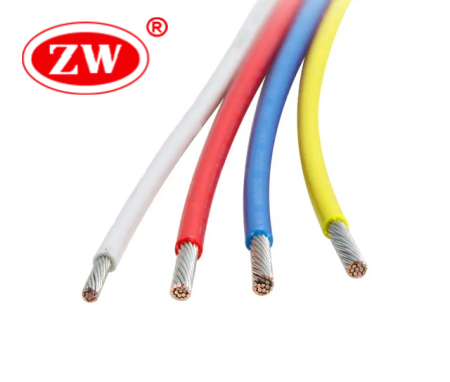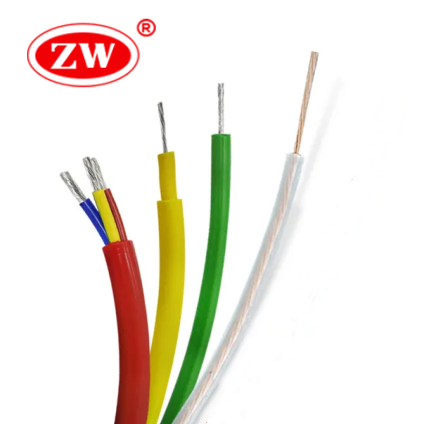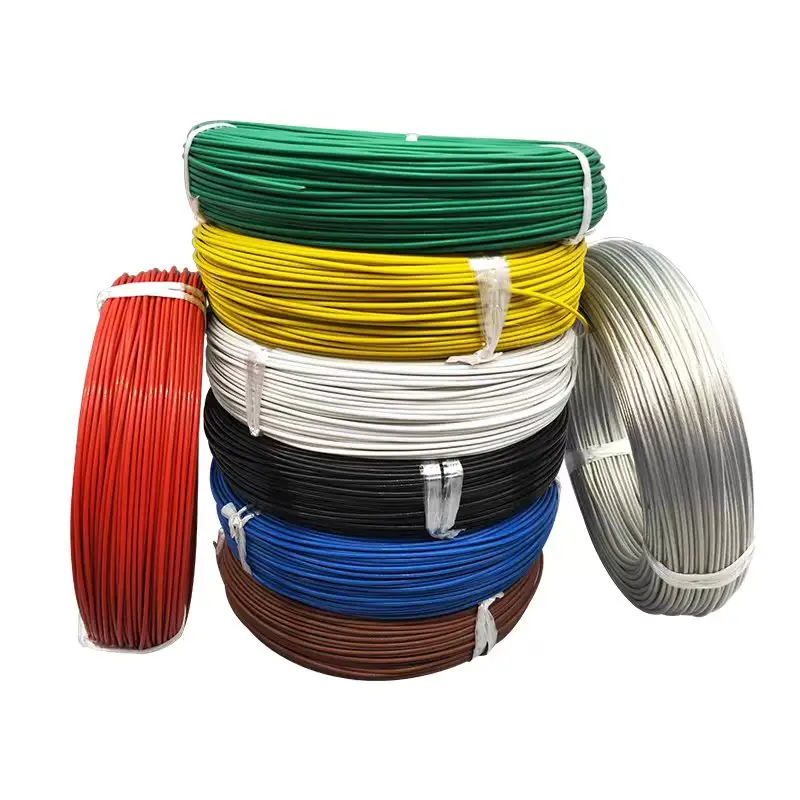
In thermal processing environments, the cost of premium cabling is a fraction of the expense incurred by downtime. High temperature wire serves as the critical safeguard against insulation failure where standard polymers embrittle or lose dielectric strength.
Beyond simple cabling, heat resistant electrical wire represents an engineered system designed for integrity. It combines oxidation-resistant conductors (tin, silver, or nickel plating) with superior insulation (fluoropolymers, silicone, mica-glass).
Read More
What Is High-Temperature Wire?
High-temperature wire is an electrical conductor designed to operate continuously at elevated temperatures (typically >150°C) without mechanical degradation or loss of dielectric withstand voltage. Unlike standard PVC options, high temp lead wires are engineered to survive environments that cause conventional insulation to embrittle.
A validated high-temperature wire system is defined by four critical parameters:
-
Thermal Rating: A declared Continuous Operating Temperature (COT) aligned with thermal cycling demands, not just peak spikes.
-
Advanced Insulation: Utilization of robust polymers such as PTFE (Teflon), FEP, ETFE, or Silicone Rubber certified to UL/CSA standards.
-
Conductor Metallurgy: Oxidation control via Tin (TC), Silver (SPC), or Nickel (NPC) plating to prevent conductor degradation.
-
Termination Stability: Resistance to “cold flow” (creep) and clamp-load failure under thermal stress.
Types of High Temperature Wire
Selecting the correct wire construction is a balance of thermal endurance, mechanical strength, and environmental compatibility. Below are the three primary categories of high-temperature cabling.
1. Fluoropolymer Wire (PTFE / FEP / PFA)
-
Best For: Applications requiring long-term thermal stability and superior chemical resistance, such as sensors, heaters, and chemically aggressive hot zones.
-
Engineering Note: Fluoropolymers have low surface friction and are susceptible to “cold flow” (creep) under compression. Standard crimps may relax after thermal cycling. To prevent connection failure, use calibrated tooling, qualified termination designs, and proper strain relief.
2. Silicone Rubber Wire (with optional Fiberglass Braid)
-
Best For: Scenarios prioritizing flexibility, vibration tolerance, and ease of routing. Ideal for motors, appliances, industrial ovens, and moving equipment near heat sources.
-
Engineering Note: Silicone chemistry can be sensitive to specific oils and fluids. In environments with oil splash or coolant mist, ensure the construction is rated for fluid exposure or specify an appropriate protective over-jacket.
FURTHER READING
3. Mica Tape + Fiberglass Constructions
-
Best For: Extreme heat environments where standard polymer insulation hits its thermal limits.
-
Commissioning Note: Binders and varnishes in the insulation may stabilize during the initial startup. Slight smoke or odor during the first heat cycle is normal. Inform commissioning teams upfront to avoid false alarms or misdiagnosis.
High Temperature Wire: Conductor & Insulation
Engineering Logic: A high-temperature wire is a system, not just a plastic coating. The reliability of the circuit depends on the compatibility between the Conductor Plating (the core) and the Insulation Chemistry (the jacket).
We categorize our solutions by material systems, integrating the correct conductor metallurgy for each temperature class.
Before selecting an insulation family below, ensure your conductor plating matches the operating temperature. Bare copper oxidizes and fails above 150°C.
| Temp Class | Plating Material | Engineering Requirement |
| 150°C | Tinned Copper (TC) | Standard for generic Silicone and ETFE. Prevents basic oxidation. |
| 200°C | Silver-Plated Copper (SPC) | Excellent conductivity. Standard for FEP/PTFE. Warning: Silver can migrate at >250°C. |
| 260°C+ | Nickel-Plated Copper (NPC) | Mandatory for extreme heat (TGGT/MGT). Does not degrade, oxidize, or migrate even at 450°C+. |
If your application exceeds 200°C, never specify Tinned Copper. You must switch to Nickel-Plated Copper to ensure the conductor survives as long as the insulation.
FURTHER READING
Tinned Copper vs Bare Copper: Which One is Better
Fluoropolymers (PTFE / FEP / PFA) Insulation
Best for: Chemical Inertness, Precision Instrumentation, and Tight Spaces.
-
FEP (UL 1332): Rated 200°C. Often paired with Tinned or Silver-plated copper. Excellent resistance to fluids (gasoline, oil, acid).
-
PTFE (UL 1180 / 1213): Rated 260°C. Requires Silver or Nickel-plated copper. The lowest coefficient of friction and highest chemical resistance.
-
PFA (UL 10362): Rated 250°C. Combines the high-temp performance of PTFE with longer continuous lengths for extrusion.
-
Engineering Constraint: Stiffer than silicone. Susceptible to “cold-flow” (deformation) under tight compression clamps.
Silicone Rubber Series (SRML) Insulation
Best for: Vibration Damping, High Voltage, and Dynamic Motion.
-
Standard Silicone (UL 3135): Rated 150°C – 200°C. Extremely flexible.
-
SRML (Silicone Rubber Motor Lead – UL 3068/3231): Features a Fiberglass Braid over the silicone.
-
Why the Braid? Silicone is mechanically soft. The braid prevents the insulation from tearing when pulled through motor stators.
-
-
Engineering Constraint: Poor abrasion resistance without a braid. Can swell in certain jet fuels.
FURTHER READING
Mica & Glass Series (TGGT / MGT) Insulation
Best for: Extreme Heat (>250°C) where polymers melt.
-
TGGT (UL 5256): Rated 250°C. Nickel-Plated Conductor + PTFE Tape + Fiberglass Serve. Moisture resistant.
-
MGT (UL 5107): Rated 450°C. Nickel-Plated Conductor + Mica Tape (Fire Barrier) + Fiberglass Braid.
-
Engineering Constraint: Limited flexibility (requires large bend radius). Not water-resistant (insulation is porous).
High Temperature Cable Solutions
Moving from Wire to Cable: When multiple high-temperature conductors are bundled together, the engineering challenges multiply. We address three critical factors in our custom cable manufacturing:
Managing the “Heat Trap” Effect (Derating)
When you bundle hot wires, they cannot dissipate heat effectively. A single wire rated for 20A may only carry 12A when bundled inside a jacket.
-
Our Solution: We use high-thermal-conductivity fillers and optimize the cabling lay-length to improve heat dissipation.
-
Engineering Advice: Always apply a 0.7 – 0.8 derating factor for multi-core high-temp cables.
Structural Integrity: Fillers & Cabling
Standard PVC fillers melt at high temperatures, causing the cable to collapse and lose its round shape (leading to gland seal failures).
-
Fiberglass / Aramid Fillers: We use inorganic fillers that withstand 500°C to maintain cable circularity and tensile strength.
-
Planetary Cabling: We use back-twist cabling machinery to prevent torsional stress on the conductors, essential for robotic or moving applications.
Shielding & Jacket Options
Protecting signal integrity in electrically noisy environments (like heater bands or furnaces).
-
Shielding:
-
Alu-Foil + Drain Wire: 100% coverage for high-frequency noise rejection.
-
Nickel-Plated Copper Braid: Mechanical protection and low-frequency EMI shielding.
-
-
Jacket Materials:
-
FEP/PFA Jacket: Chemical proof, waterproof, but stiff.
-
Silicone-Glass Braid Jacket: Flexible, abrasion-resistant, ideal for dry ovens.
-
Stainless Steel Overbraid (SSB): The ultimate mechanical armor for cables dragging over rough concrete or sharp steel edges.
-
Test And Quality Control
In the high-temperature wire industry, visual inspection is a dangerous trap. A wire that looks perfect on the spool can oxidize and fail in six months if the internal metallurgy (plating) or insulation chemistry is flawed.
At ZW Cable we understand that your reputation hangs on the reliability of our wire. That is why we invest in verifying the “Invisible Metrics” that standard datasheets ignore:
-
We Verify Plating Thickness (XRF): We use X-Ray Fluorescence to ensure Nickel/Silver plating meets ASTM standards. We guarantee the conductor won’t turn black and fail at 300°C.
-
We Guarantee Concentricity: By using dual-axis laser micrometers, we ensure the conductor is perfectly centered. This means your automated stripping machines run smoothly without scrapping expensive wire.
-
We Ban “Regrind” Materials: We verify resin purity using FTIR spectroscopy to ensure 100% virgin polymer usage for maximum dielectric safety.